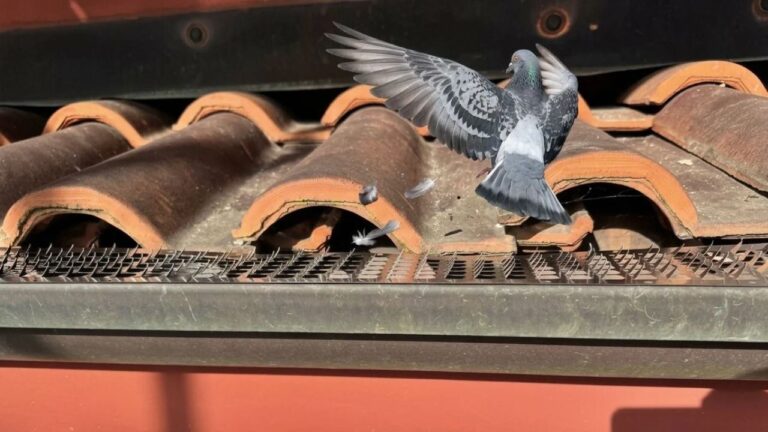
WonderPest invisible pigeon deterrents protect historic and valuable buildings without compromising architectural aesthetics thanks to patented stainless steel technology.
Summary
- The conflict between hygiene and architectural decorum
- The problem with traditional needle systems
- Tikol T: The new standard in invisible deterrents
- Ideal applications: from modern apartment buildings to historic buildings
- Why invest in a professional system
- FAQ – Invisible pigeon deterrents
The conflict between hygiene and architectural decorum
In Italian historic centres, the problem of bird removal clashes daily with the protection of artistic heritage. Pigeon droppings cause serious structural damage: uric acid corrodes marble, natural stone and historic plasterwork, resulting in high restoration costs and irreversible loss of architectural details.
However, superintendents and municipal regulations often prohibit the installation of traditional deterrents on listed buildings. Condominium administrators in prestigious neighbourhoods receive complaints from owners about the visual impact of conventional systems. A solution is needed that guarantees the protection of monuments from pigeons without compromising aesthetics.

Installation of Tikol T WonderPest invisible pigeon deterrents at the Curci Theatre in Barletta
The problem with traditional spike systems
Conventional deterrents have obvious aesthetic issues that make them unsuitable for sensitive architectural contexts.
The cage effect on cornices
Plastic or metal spikes create a ‘cage effect’ that is visible even from a distance, transforming elegant balustrades and cornices into fortified structures. On Art Nouveau, Baroque or Neoclassical façades, these devices permanently disfigure the compositional harmony intended by the architect.
Accumulation of dirt and visual degradation
Traditional spikes trap leaves, branches and debris carried by the wind. This organic accumulation creates dark deposits between the spikes, progressively worsening the aesthetic appearance. The trapped material also encourages the formation of nests, negating the deterrent function.
The limitation of polycarbonate
Economical polycarbonate bollards undergo photo-degradation: UV rays cause visible yellowing within 18-24 months of installation. The material becomes opaque and brittle, cracking under thermal stress or hailstorms. Frequent replacement generates recurring costs and inconvenience due to repeated scaffolding.
Tikol T: The new standard in invisible bollards
WonderPest’s Tikol T invisible pigeon deterrents are designed to overcome these limitations through patented innovation and premium materials.

Tikol T80 WonderPest stainless steel pigeon deterrent, 80 mm wide x 526 mm long. Also available in 15 m rolls, 25 mm wide
Minimalist patented design
The moulded structure features lamella elements with small movable protrusions arranged on a continuous surface. Unlike traditional vertical needles, the low profile (a few millimetres high) blends into the architectural line without creating aggressive visual discontinuities.
The elastic tips have a mechanical feature that guarantees constant elastic return and long material life.
Premium material: hardened 301 stainless steel
Hardened 301 stainless steel is the material of choice for applications on prestigious buildings. The natural metallic finish reflects the ambient light, blending in with stone cornices, metal balustrades and marble window sills.
From a few metres away, the invisible pigeon deterrent becomes virtually indistinguishable from the surface on which it is installed. This feature is essential for obtaining authorisation from the Superintendency in protected historic centres.
301 stainless steel is infinitely resistant to corrosion, oxidation and acid attack from bird droppings. It does not undergo UV photodegradation, maintaining its original finish unchanged after decades of exposure.
Modularity for complex geometries
The 500 mm modules have pre-cut lines that allow them to be adapted to curved surfaces, decorated capitals, shaped corbels and illuminated signs. The elasticity of the material allows controlled flexing to follow complex profiles without the need for rough cuts that would damage the aesthetics. They are available in two widths (25 mm and 80 mm), also in 15-metre rolls.
Ideal applications: from modern apartment buildings to historic buildings
Tikol T technology is ideal for use in contexts where the removal of birds from historic centres must comply with strict aesthetic constraints.
Historic centres and listed buildings
On historic buildings, churches, loggias and monumental porticoes, the invisible deterrent preserves the visual integrity required by conservation regulations. Documented installations on historic buildings demonstrate the suitability of the system in contexts of the highest value.
Protection of company signs and logos
For prestigious commercial activities, luxury boutiques and institutional headquarters, protecting illuminated signs and company logos without covering them with metal spikes keeps the brand image intact.
Residential balconies and terraces
Private individuals living in elegant surroundings do not want to see their homes transformed into fortresses. Transparent Balance B and discreet Tikol T offer effective protection while maintaining the residential decor.
Clean installation: zero holes, maximum hold
The installation of WonderPest invisible pigeon deterrents has been designed not to damage valuable materials. They can be fixed with neutral structural silicone on natural stone and marble, avoiding drilling holes that would compromise the structural integrity.
Alternatively, discreet self-tapping screws allow mechanical anchoring on metal or wooden surfaces. The flexibility of installation allows adaptation to specific requirements of the Superintendency.
Why invest in a professional system
A cost comparison between traditional bollards and WonderPest technology highlights substantial advantages in the medium to long term.
Economical polycarbonate systems require replacement every two years due to UV degradation, generating recurring costs for materials, labour and scaffolding. Hardened 301 stainless steel guarantees unlimited durability without maintenance, amortising the initial investment through the complete elimination of replacement costs.
For condominium administrators and owners of prestigious properties, enhancing the aesthetic value of the building translates into maintaining its asset value. On historic buildings, avoiding penalties for unauthorised installations is an additional economic benefit.
Request a free technical consultation: Visit the Tikol T page or contact WonderPest for a professional inspection of listed buildings and complex installations.
Technical insights: Visit the page with photos of some invisible installations, including on monuments and historic buildings.

Curci Theatre in Barletta – Tikol T invisible WonderPests installed
FAQ – Invisible pigeon deterrents
1. What are invisible pigeon deterrents and how do they work on historic monuments?
Invisible pigeon deterrents are bird repellent systems designed to blend in completely with the surrounding architecture, making them virtually indistinguishable from a few metres away. WonderPest Tikol T technology uses hardened 301 stainless steel with a natural metallic finish that reflects light like stone, marble or architectural metal. The system works on the basis of elastic lamellae with small movable protrusions: when a bird attempts to land, it encounters an unstable and uncomfortable surface that causes it to fly away without injury. The low profile (a few millimetres high) blends into the architectural lines without creating visual discontinuity. This feature is essential for obtaining authorisation from the Superintendency and for protecting monuments from pigeons in restricted historic centres, where traditional deterrents are systematically rejected due to their excessive aesthetic impact.
2. What are the main differences between traditional needle deterrents and Tikol T WonderPest?
A comparison between needle deterrents and Tikol T WonderPest highlights substantial advantages in terms of aesthetics, durability and functionality. Traditional needles create a visible ‘cage effect’, trap debris and leaves, worsening their appearance over time, and use polycarbonate that yellows due to UV photodegradation within 18-24 months, requiring frequent replacement. Tikol T, on the other hand, has a minimal, almost invisible profile, a continuous surface that does not accumulate dirt, and hardened 301 stainless steel with unlimited durability and no maintenance. From a functional point of view, static needles are often used by pigeons as a nesting base, while the flexible, movable tips of Tikol T create permanent instability, preventing any perching. The production material guarantees consistent mechanical properties over time. For prestigious buildings, the economic difference is offset by eliminating biennial replacement costs and preserving the aesthetic value of the property.
3. Is the invisible pigeon deterrent made of hardened 301 stainless steel authorised in historic centres?
Yes, the WonderPest invisible pigeon deterrent in hardened 301 stainless steel is specifically designed to obtain authorisations in restricted contexts. The Superintendence and municipal offices of historic centres evaluate visual impact as a primary criterion: traditional needle deterrents are frequently rejected because they disfigure the facades, cornices and balustrades of protected buildings. Tikol T overcomes this obstacle thanks to its natural metallic finish, which blends in with architectural materials (stone, marble, wrought iron), and its low profile, which does not alter the silhouette of the building. Documented installations on historic buildings demonstrate the suitability of the system. When applying for authorisation, it is advisable to submit: technical data sheet, photographic renderings showing aesthetic integration, and international patent documentation. Many restoration professionals collaborate with WonderPest on projects involving listed buildings precisely because of this regulatory and aesthetic compatibility.
4. How does bird removal in historic centres work without damaging ancient façades?
Bird removal in historic centres requires solutions that simultaneously protect the architectural surface and guarantee permanent deterrence. WonderPest invisible pigeon deterrents use non-invasive installation through two methods: neutral structural silicone for natural stone, marble and porous surfaces (avoiding drilling that would compromise structural integrity), or discreet self-tapping screws on metal or wooden surfaces when the substrate allows. Hardened 301 stainless steel does not release oxides or corrosive substances that could stain historic plaster or travertine. The continuous surface prevents the accumulation of acidic droppings on the repellent itself, eliminating the risk of the device becoming a source of chemical degradation. The pre-cut lines allow adaptation to decorated capitals, shaped corbels and elaborate cornices without rough cuts. Furthermore, the device is flexible and can adapt to curved surfaces. This ease of installation allows work to be carried out on complex architectural elements while preserving every artistic detail.
5. How long does an invisible stainless steel pigeon deterrent last compared to plastic systems?
An invisible pigeon deterrent made of hardened 301 stainless steel has a theoretically unlimited lifespan, while plastic/polycarbonate systems need to be replaced every 18-36 months. The stainless steel used by WonderPest is indefinitely resistant to: corrosion from sea salt, chemical aggression from uric acid in droppings, extreme temperature cycles from -15°C to temperatures above 60°C in midsummer, hailstorms and mechanical stress without permanent deformation. Polycarbonate, on the other hand, undergoes progressive UV photodegradation, causing visible yellowing, embrittlement with breakage under thermal stress or hail, and loss of elasticity, which compromises its deterrent function. A total cost analysis over 10 years shows that five replacements of economical systems (material + labour + scaffolding) far exceed the initial investment in Tikol T. For historic buildings, it avoids repeated scaffolding and also reduces the risk of accidental damage during the works.
Contact us for a free consultation or more information.